


From Flying to Falling: The Crazy World of Dreams
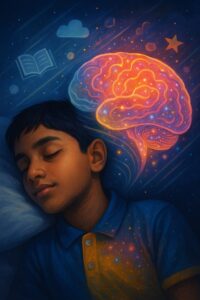 Every night, as we close our eyes and drift into sleep, our minds take us on journeys that are sometimes magical, sometimes confusing, and often unforgettable. One moment, we’re soaring through the skies, feeling the wind on our face; the next, we’re back in school, revisiting a memory or exploring a place that doesn’t even exist. But have you ever wondered why we dream? What purpose do these nightly stories serve?
Scientists have been fascinated by dreams for centuries. While much about them remains mysterious, research has revealed that dreams are far from random—they play important roles in how our brains function and how we process life.
Dreams happen mostly during a stage called REM, or Rapid Eye Movement, sleep. During this time, our brains are surprisingly active, almost as if we’re awake, while our bodies stay still. It’s like our brain is producing its own private movie, full of images, emotions, and ideas that often seem strange or unreal.

One of the main reasons we dream is memory processing. Think about a student revising for exams: dreams help the brain sort through everything learned during the day, deciding what’s important to remember and what can fade away. This is why after a good night’s sleep, recalling what you studied often feels easier and more natural.

Dreams also help with problem-solving. Have you ever woken up with an idea for a school project or a solution to a tricky math question? That’s your brain working in the background while you sleep, connecting ideas in ways it couldn’t when you were distracted during the day.
Emotions are another big part of dreams. Feeling nervous about a test or upset over a disagreement with a friend? Dreams often act as a safe space for your brain to process these feelings. Sometimes, a strange or even scary dream can help you wake up calmer, more focused, and ready to face the day.

Of course, not every dream has a deep meaning. Sometimes, dreams are simply our brains mixing fragments of memories, conversations, and images into stories that might not make much sense—but still keep the mind active and creative.
There are also some fun facts about dreams. Everyone dreams every night, even if they don’t remember it. Most people have between three to six dreams per night. Some people experience lucid dreams, where they realize they’re dreaming and can even influence what happens. Animals, including dogs, cats, and even mice, dream too, often moving or twitching in their sleep. Recurring dreams, where the same scene or theme repeats, are common, especially during stressful periods like exams or competitions.
Interestingly, you can even influence your dreams. Keeping a dream journal, writing down your dreams immediately after waking, avoiding screens before bed, or practicing lucid dreaming techniques can all make your dreams more vivid and meaningful.

Dreams aren’t just random entertainment—they help us learn, process emotions, spark creativity, and understand ourselves better. For students, dreaming and getting good sleep are essential. They improve focus, mood, memory, and even problem-solving skills, making schoolwork, hobbies, and everyday life easier to navigate.
In the end, dreams remind us of just how extraordinary the human brain is. Wild, emotional, or mysterious, they offer a glimpse into our thoughts and feelings. The next time you wake up from a strange dream, pause for a moment and wonder: What is my brain trying to tell me tonight?