
Tiny Teachers, Big Lessons
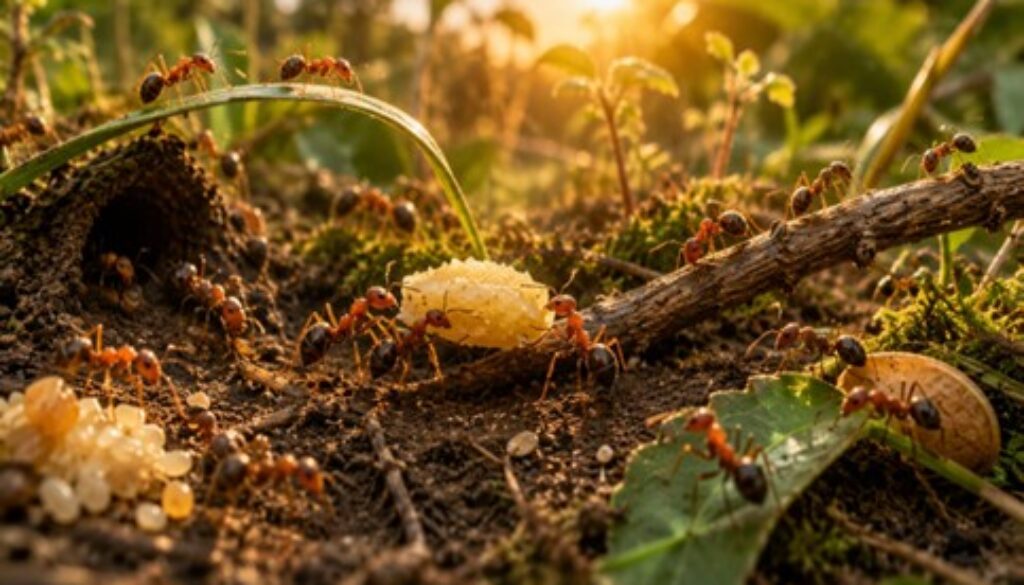
Have you ever stopped for a moment to watch a line of ants?

An ant begins its day with work. Some ants search for food, some help maintain the nest, while others care for the young. When food is found, ants work together to carry it back to their colony. Something that may be impossible for one tiny ant becomes possible when many work together.
Ants and humans may seem completely different, but surprisingly, our societies have a few things in common.
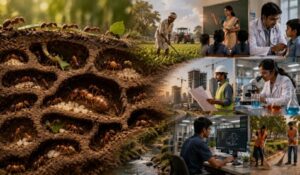
Ants live in organised colonies where different members perform different roles. Worker ants gather food and care for the colony, while the queen has the important role of laying eggs. Each ant contributes in its own way to the survival of the colony.
Human society works through shared responsibilities too. We have farmers, teachers, doctors, engineers, scientists and people from countless other professions contributing in different ways. Humans have built cities, developed technology and made discoveries that have transformed the world.
Yet, when I observe ants, one quality stands out to me most — teamwork.
Place an obstacle in front of a group of ants and watch what happens. They rarely seem to stop for long. They find another path, move around it and continue towards their goal. Their persistence reminds us that an obstacle does not always mean we should give up; sometimes, we simply need to find another way forward.
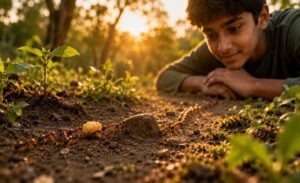
Their organised colonies can also remind us of the importance of keeping our own surroundings clean and taking responsibility for the places in which we live.
Humans possess extraordinary intelligence and creativity. But sometimes, even the smallest creatures around us can remind us how to use our abilities better — by cooperating, staying disciplined, doing our share of work and not giving up easily.
Perhaps that is why observing nature can teach us so much.
After all, a teacher does not always have to be bigger than the lesson it teaches.